When Lisa noticed brown edges on her hostas and a thirsty patch near the vegetable bed every July, she blamed the summer heat — until she checked her hose: she’d been running sprinklers inconsistently and losing hours to manual watering. Across town, Mark’s new townhouse has tiny planters and a small strip of lawn that either gets soaked or forgotten entirely. Both problems come down to timing and delivery: the right schedule plus the right hardware. Below are expert tips that match common watering challenges to smart, specific setups so you can automate your garden watering with RainPoint timers and get consistent results.
Match the challenge to the right timer: small yards, big yards, and mixed spaces
Problem: You have a small lawn with irregular access to an outdoor faucet and forget to move sprinklers after mowing. Solution: Use a mobile automated system keyed to zones. A WiFi-enabled plug-in timer paired with popup or oscillating sprinkler heads lets you program short, frequent runs and skip watering after rain.
Recommended setup for small lawns (example)
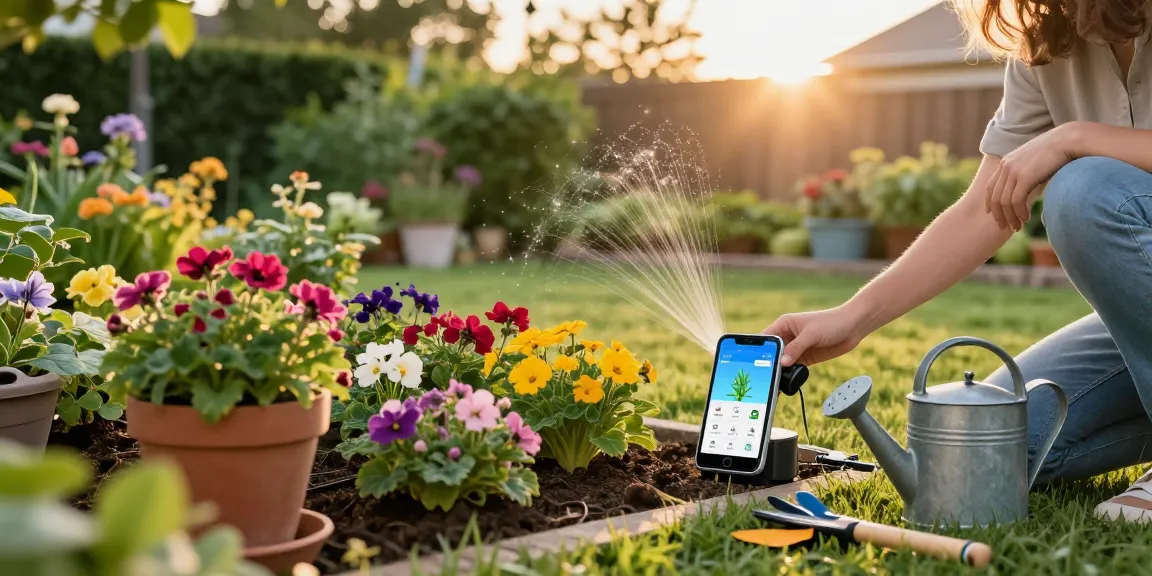
Use a single-station WiFi hose timer and a rotating sprinkler. Program 15-minute sessions at dawn and early evening twice a week during summer. That pattern avoids runoff while keeping grass green. A WiFi timer such as the RainPoint model lets you adjust runs from your phone when weather changes or when you notice a dry spot—no extra trips outside.
Problem: Your large yard needs multiple zones and soil types. Solution: Install a multi-zone smart controller with drip for beds and rotary heads for turf. The controller should support weather-based adjustments and flow monitoring to protect pipes.
Recommended setup for large lawns (example)
For an acre with clay in the back and sandy loam near the house, assign separate zones: rotary nozzles for turf on clay with longer, less frequent cycles; and drip lines for beds in sandy soil with shorter, more frequent pulses. With the right controller the system can cut watering time by up to 30% over a fixed-schedule timer, and EPA WaterSense notes that smart irrigation controllers can save “up to 15%” or more depending on local climate — in some cases thousands of gallons per year (EPA WaterSense).
Vegetable beds and flower borders: precise delivery beats overwatering
Problem: Tomatoes wilt even when you water daily. Solution: Target the root zone with drip tubing and pressure-compensating emitters for steady, deep moisture. Drip reduces surface evaporation and keeps leaves dry, lowering disease risk.
How to configure drip for vegetables
- Use 1/4" distribution tubing with 1 GPH emitters spaced 12–18" apart for tomatoes and peppers.
- Run sessions every other day for 20–30 minutes in warm months; adjust after heavy rain.
- Include a flush valve and inline filter to prevent clogs from organic-rich garden water.
Pair this with a RainPoint timer if you want smartphone control and seasonal adjustments. For example, a 10-foot raised bed with six tomato plants might use roughly 6–8 GPH total; running 30 minutes every other day delivers a steady supply without saturating the topsoil.
Problem: Your flower beds get splashed by lawn heads and flowers show foliage rot. Solution: Use soaker hoses or drip lines buried under 1–2" of mulch so water reaches roots quietly, with short, frequent pulses early morning.
Potted plants and balconies: slow, steady self-watering solutions
Problem: You travel on weekends and your patio pots dry out quickly. Solution: A micro-sprayer or inline reservoir drip system on a compact timer provides predictable, short cycles that keep pots evenly moist without drowning roots.
Practical micro-irrigation setup
Install a compact manifold with a small 1/2" supply and several 1/8" drip lines to each pot. Use emitters with 0.5–1.0 GPH and program the timer for two 10-minute pulses per day in hot weather. A RainPoint WiFi hose timer can run these cycles and let you check battery or signal status from your phone before a trip.
Example: For six 10" pots in full sun, 0.75 GPH emitters run for 10 minutes twice a day equals about 7.5 gallons per week — water-efficient and reliable for plant health.
Fix overwatering and runoff with smarter scheduling and hardware
Problem: Water pools on sidewalks and the soil seems soggy despite short watering sessions. Solution: Break longer cycles into multiple short cycles spread an hour apart (cycle-and-soak). That allows water to absorb rather than run off, especially on slopes or heavy clay soils.
Cycle-and-soak example and schedule
For a lawn zone needing 0.5" of water, split the total into three 10-minute runs spaced 45–60 minutes apart. That schedule lets the soil accept moisture between pulses and reduces puddles. If you use a RainPoint multi-station setup, you can automate these micro-cycles per zone rather than doing them manually.
Soil TypeRecommended CycleFrequencySandy2 x 15 minEvery other dayLoam3 x 10 min2–3 times/weekClay4 x 8–10 min2 times/week
Concrete figure: University extension programs often recommend watering less frequently but longer for deep-root growth — for many lawns that’s 1–1.25 inches weekly, split across 2–3 sessions. Smart timers make these patterns repeatable without guesswork.
Advanced tips: sensors, flow monitoring, and seasonal programming
Problem: You’re not sure if sprinklers are working while you're away, or you want to avoid wasting water during storms. Solution: Add a rain sensor or soil moisture probe to your controller and enable weather adjustment on your timer. Most smart timers offer program overrides and historical run logs so you can see how much water you used.
Install a flow sensor on any multi-zone system to detect leaks or a stuck valve. Example: If a zone’s typical run uses 10 gallons and the sensor shows 30 gallons, you’ve likely got a stuck rotor or pressure issue—catching that early saves water and prevents irrigation erosion.
If you want a one-stop way to manage timers across hoses and valves, consider a hands-on how-to link for devices that fit many yards: automate your garden watering with RainPoint timers. That page shows models that pair with hose-end drip kits, so you can start a zone without rewiring valves.
For a typical suburban yard, switching to weather-based scheduling and adding a flow sensor can reduce seasonal water use by 20–40% compared with manual watering. And if you need help selecting features for your yard size, a WiFi timer from RainPoint can handle that schedule automatically while you fine-tune emitter spacing and run times.